


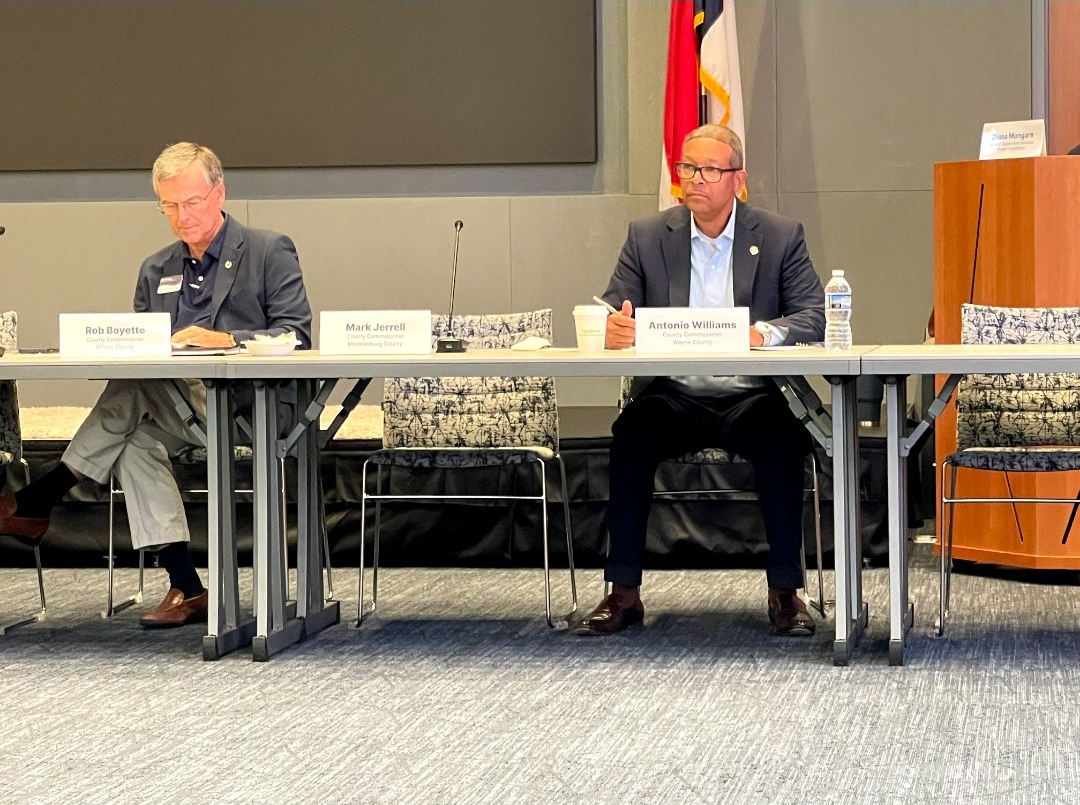
WAYNE COUNTY, N.C. — Wayne County Commissioner Antonio Williams is helping shape the legislative priorities of North Carolina’s 100 counties following his appointment to the North Carolina Association of County Commissioners (NCACC) Legislative Goals Committee.
Williams participated in a series of policy development meetings October 7–8, joining county leaders from across the state to review proposed legislative goals and develop a unified advocacy agenda for the North Carolina General Assembly.
The committee reviewed recommendations from six specialized subcommittees covering agriculture and economic resources, general government, health and human services, justice and public safety, public education, and tax and finance.
The goal is to combine individual county concerns and statewide priorities into a comprehensive legislative agenda addressing challenges facing local governments.
Protecting County Budgets and Addressing SNAP Costs
One of the major priorities discussed was the financial impact of upcoming Supplemental Nutrition Assistance Program (SNAP) cost-sharing requirements scheduled to take effect October 1, 2027.
Wayne County leaders are advocating for the repeal, modification, or delay of the requirements, arguing that counties could face additional financial burdens tied to state-level SNAP payment error rates.
Local officials contend that the proposed cost-sharing structure could unfairly penalize individual counties for payment errors that are not entirely within their administrative control.
Increasing Education Funding
The committee also reviewed proposals aimed at strengthening public education funding and infrastructure.
Among the priorities is legislation that would restore state lottery funding allocations to the original statutory level of 38%, as referenced in North Carolina General Statute 18C-162.
County leaders are also seeking greater flexibility in how education-related funding can be used, including investments in school technology, security improvements, and capital projects.
The proposals are intended to help counties address growing school infrastructure needs while balancing other financial responsibilities.
Expanding Water and Wastewater Infrastructure
Another major focus was improving access to funding for water and wastewater infrastructure projects.
Committee members discussed proposals to provide counties with greater flexibility in using enterprise funds, which are generally associated with services such as water and sewer operations.
County leaders believe additional financial flexibility could help communities move forward with critical utility expansion and modernization projects.
The committee also considered legislative goals supporting regional water systems, improved services for underserved communities, and additional funding to protect drinking water supplies and natural resources.
Williams Emphasizes Local Representation
Williams said the discussions involved extensive debate as county leaders worked to identify priorities that could benefit communities throughout North Carolina.
“There was much debate on what we need in our counties,” Williams said. “We had to carefully craft the legislation so it made sense for local communities.”
Williams emphasized the importance of protecting county budgets from additional SNAP-related expenses while securing resources for infrastructure improvements.
“Protecting our local budgets from being penalized by state SNAP payment error rates, expanding enterprise fund flexibility, and driving funding to modernize water infrastructure while protecting our drinking water is absolutely vital,” Williams said.
He also expressed concern about the financial challenges counties could face as a result of federal legislation, including the One Big Beautiful Bill Act.
Williams praised NCACC President Allen Thomas, fellow committee members, and association staff for their leadership throughout the process.
“Serving on this committee ensures that the grassroots concerns from right here in our community get a direct seat at the table when the state sets its legislative priorities,” Williams said.
Next Steps in the Legislative Process
The October meetings represent an early stage in the NCACC’s two-year legislative goals development process.
Recommendations from the Legislative Goals Committee will advance to the NCACC Board of Directors later this month for further review and preparation.
The process will conclude at the NCACC Legislative Goals Conference, scheduled for November 19–20, 2026, in Wake County.
During the conference, county delegates from across North Carolina will vote on the organization’s official legislative priorities for the next two years.
The approved agenda will guide the association’s advocacy efforts before the North Carolina General Assembly, giving counties a collective voice on issues affecting local budgets, public services, education, and infrastructure.
For additional information about Wayne County initiatives, visit the Wayne County Government website.


Comments