


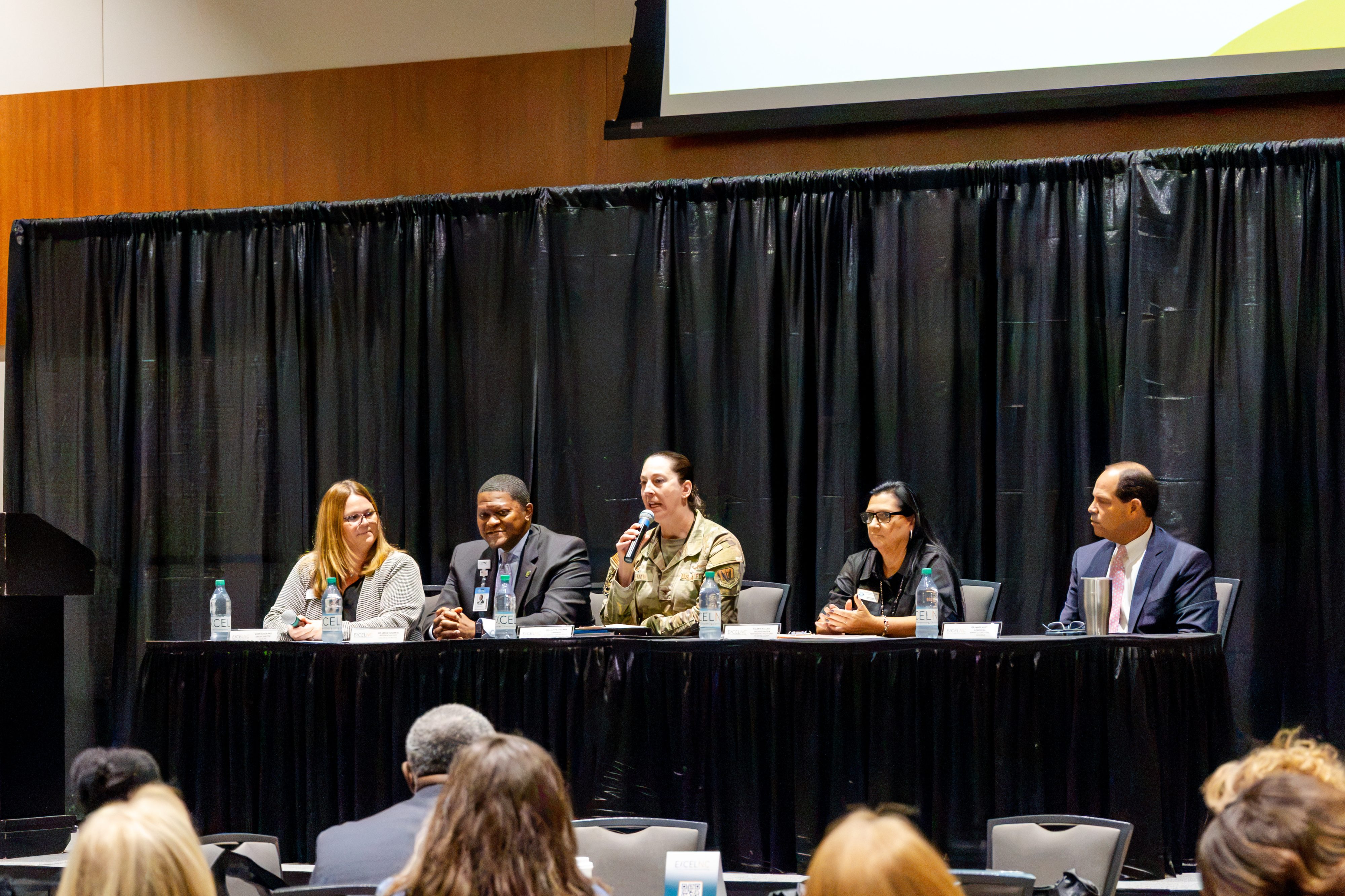
GOLDSBORO, N.C. — A lack of affordable and accessible child care is costing Wayne County an estimated $39.9 million annually, according to economic data presented during the Business, Workforce & Child Care Summit held Friday, Sept. 18, at the Maxwell Center in Goldsboro.
Local business, military, education and community leaders gathered for the summit, convened by the ExCEL NC coalition, to examine how North Carolina’s child care crisis is affecting workforce participation, straining employers and creating economic challenges for families and businesses.
The discussion emphasized that child care is not simply a family issue but an essential part of the economic infrastructure that allows employers to recruit and retain workers.
The summit featured a panel of local leaders, including Dr. Jessie Tucker, President and CEO of UNC Health Wayne; Dr. Marc Whichard, Superintendent of Wayne County Public Schools; Valerie Wallace, Executive Director of the Partnership for Children of Wayne County; and Col. Elithe Zoglman, Commander of the 4th Mission Support Group at Seymour Johnson Air Force Base.
Kristi Maida, Ph.D., Director of ExCEL NC, moderated the discussion. Members of the Wayne County Chamber of Commerce and other community leaders also attended.
“Child care is a readiness issue,” Zoglman said. “This is the next generation of Americans and I want to make sure they are set up for success.”
Wallace emphasized that the lack of reliable child care creates challenges that extend beyond individual families.
“If parents don’t have child care, and they can’t go to work, it becomes a business issue,” Wallace said. “And if enough families have issues, it becomes an economic issue.”
Child Care Shortages Impact Wayne County’s Workforce
According to economic estimates presented during the summit, North Carolina’s child care crisis costs the state approximately $5.65 billion annually, including $4.29 billion in lost business activity attributed to employee absenteeism and turnover.
In Wayne County, businesses lose an estimated $30.7 million each year because of the lack of affordable and accessible child care options.
During the past year, approximately 7,028 workers in Wayne County experienced employment disruptions related to child care challenges.
The county also loses an estimated $4.9 million in state tax revenue and $4.3 million in local tax revenue annually, bringing the total estimated economic impact to $39.9 million.
Panelists discussed how child care shortages affect employers across multiple industries, including retail, hospitality, health care and banking.
Tucker explained that the issue also affects patients who struggle to access medical services because they cannot find reliable care for their children.
“We have patients who are not getting the care they need because they cannot find decent child care,” Tucker said. “This is going to have to be a community-wide solution.”
Business and Community Leaders Discuss Solutions
ExCEL NC brings together business executives from across North Carolina to examine early childhood policies and their relationship to workforce participation and economic growth.
During the summit, participants discussed recently approved state legislation establishing a statewide child care subsidy reimbursement floor.
The measure is intended to bring subsidy reimbursement rates closer to the actual cost of providing child care, particularly in rural communities where providers have faced financial challenges.
Business leaders discussed the potential impact of the legislation while emphasizing the need for continued investment in child care services to address workforce shortages and support economic development.
Economic modeling presented at the summit estimates that the reimbursement reform could increase North Carolina’s gross domestic product by more than $252 million, increase personal income by $161.4 million and support approximately 4,030 jobs statewide, including more than 3,200 child care jobs.
Additional research presented by the coalition estimates that addressing North Carolina’s broader child care challenges could generate as much as $7.5 billion in additional GDP and support up to 60,000 new jobs statewide.
The summit highlighted the connection between child care availability, workforce stability and economic development, with local leaders emphasizing the importance of collaboration among businesses, child care providers and community organizations to address the challenges facing Wayne County families.



Comments